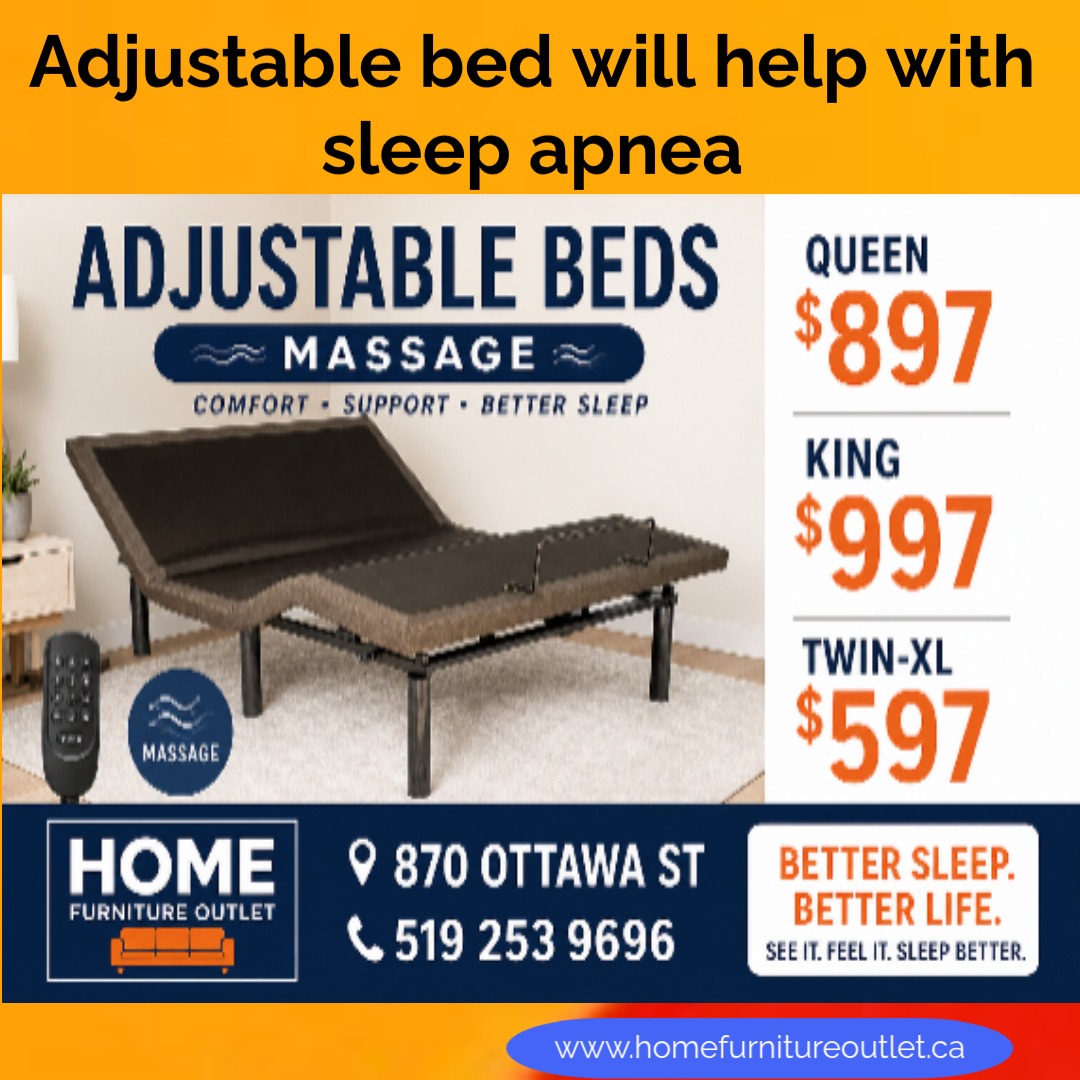
If someone has sleep apnea, a mattress won’t treat the condition, but the right one can make it easier to sleep in positions that reduce symptoms and improve comfort.
Here are the best options:
• Medium-firm mattress: Generally the best choice because it keeps the spine aligned and helps prevent excessive sinking that can make breathing more difficult.
• Adjustable bed compatible mattress: One of the most helpful options. Raising the head of the bed by 30–45 degrees can reduce airway collapse for some people with obstructive sleep apnea.
• Hybrid mattress: Combines supportive coils with pressure-relieving foam, making it easier to change positions and providing good support.
• Latex mattress: Offers firm, responsive support without allowing the body to sink deeply.
Memory foam can work well if it’s medium-firm, but very soft memory foam that lets the body sink too much is generally less ideal.
If the person sleeps:
• On their side: This is usually the best position for obstructive sleep apnea. Choose a medium-firm mattress with good pressure relief for the shoulders and hips.
• On their back: Sleeping on the back can worsen sleep apnea. An adjustable bed that elevates the head can help.
For many people with sleep apnea, the most effective sleep setup is:
1. A medium-firm hybrid or latex mattress.
2. An adjustable bed base.
3. Consistent use of a CPAP machine if it has been prescribed.
If you sell mattresses, a medium-firm hybrid paired with an adjustable base is often an excellent recommendation for customers with sleep apnea.